Can value be designed, or does it already exist within a material or an object?
After years of working primarily with gold, gemstones, and precious materials, I began to question whether value could emerge through the process of design itself. Rather than starting with materials that already carry established economic or symbolic value, I began looking for overlooked natural materials—objects whose value was not immediately apparent.
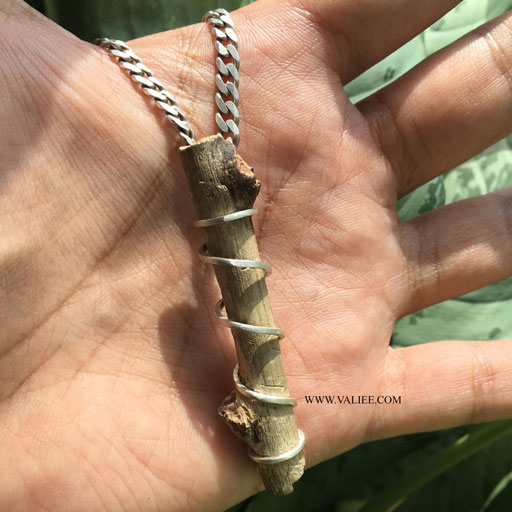
The final jewellery piece, combining found wood and 925 silver while preserving the material’s natural identity and traces of time.
Searching for Value
The process began with walking, searching, observing, and collecting.
I looked for pieces of wood, dried seeds, and other natural fragments that could attract my attention through their own qualities. The time spent searching and encountering these materials became part of the process of valuing them.
From the collected materials, I selected a piece of found wood and spent time observing its physical condition and distinctive traces: cracks, cavities, changes in colour, small holes, decay, and other marks left by time.
Rather than attempting to erase these characteristics, I chose to design around them and preserve the existing identity of the material.
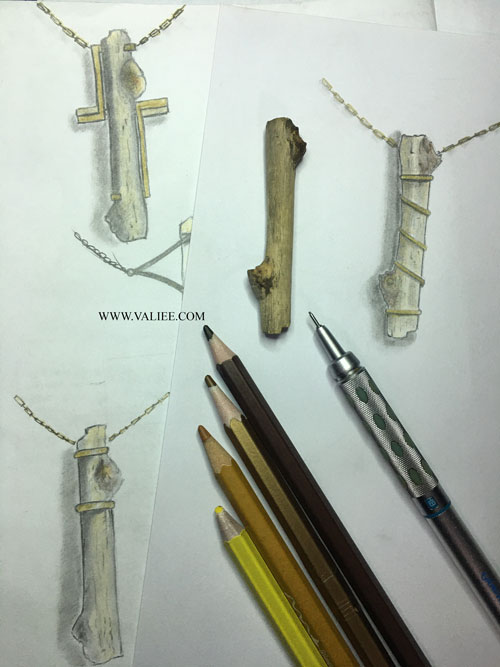
Natural materials collected and selected during the initial exploration of the Designing Value project.
Material study and hand sketches exploring ways of preserving the found wood while developing its jewellery form.
Material Agency
The material was not simply a medium through which I executed a predetermined design. Its condition, scale, fragility, and existing form became active conditions in the design process.
The vulnerability of the wood influenced the form of the jewellery, the choice of a pendant as the final format, and the way the piece had to be constructed. Because the wood could easily be damaged by heat or chemical processes normally used in metalwork, the construction sequence and connection system had to be reconsidered.
3D design study combining found wood with a protective silver structure, exploring how the material could be preserved while becoming a wearable object.
3D construction model exploring the detachable components and assembly system designed to protect the found wood during fabrication.
Exploded view of the jewellery construction, showing how the silver components are designed to be assembled and securely joined by riveting, without welding, while firmly holding the found wood in place.
The silver structure was therefore designed around the wood rather than forcing the wood to conform to a predetermined structure. A mechanical, riveted connection allowed the metal components to be assembled while protecting the wood and minimizing its exposure to potentially damaging processes.
In this sense, the material became part of determining what the design could become.
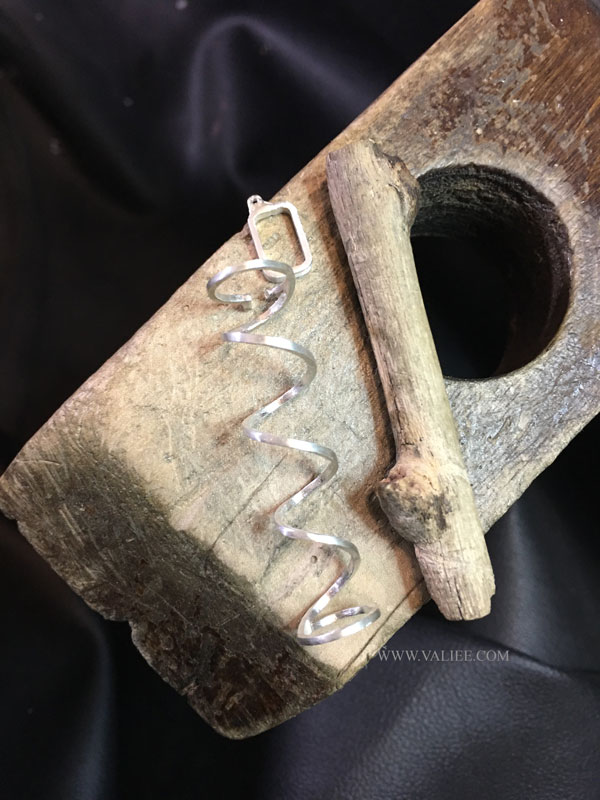
Cast silver components prepared as part of the construction process for the Designing Value jewellery project.
Smoothing the cast silver components with a rotary abrasive tool to remove surface irregularities and create an even finish before assembly.
Protection and Contrast
The wood was conceived as more than a found fragment. Its traces of decay and transformation suggested the passage of time, while also evoking the tree as a living system and, more broadly, the vulnerability of the natural environment.
Gold and silver appeared in the early sketches as materials of protection: a deliberate contrast between the perceived value of precious metals and the overlooked value of the natural fragment.
For the final piece, silver was intentionally left matte rather than highly polished. I wanted its presence to remain restrained, allowing the wood, with all its imperfections and traces of time, to remain visually dominant.
Final surface finishing of the silver components, smoothing the surfaces and preparing them for the final assembly with the found wood.
Final matte finishing of the silver components, preserving a subtle surface character before assembly with the found wood.
Reflection
This project began with a question: Can value be designed, or does it already exist within a material or an object?
Through the process, I came to understand that value does not emerge simply by transforming a low-value material into a jewellery object. It develops through the time spent searching, encountering, selecting, observing, designing with, protecting, and preserving the material.
The material itself became an active participant in this process. Its existing condition, fragility, scale, and identity influenced the decisions that shaped the final object. Rather than imposing a predetermined form onto the wood, I developed the design in response to what the material allowed, required, and suggested.
This changed my understanding of value. I began to see it not simply as an inherent quality of a material or an object, but as something that can emerge through the relationship between material, maker, process, and meaning.
This project therefore became a starting point for a broader investigation into how value can emerge through material encounters and design processes. In my subsequent material-based practices, this inquiry has expanded toward questions of material vulnerability, ecological attachment, and care, asking how embodied encounters with natural materials might foster relationships that extend beyond value-making.
The completed jewellery piece, bringing together found wood and matte silver through a material-led design process.
Documentation
The project is documented through sketches, material studies, design development, and making processes, tracing the transformation of a found piece of wood into a wearable jewellery object. The documentation includes the development of the protective silver structure, casting and surface finishing processes, assembly, and the final jewellery piece. Together, these materials reveal how the qualities and fragility of the wood influenced both the design decisions and the making process.